
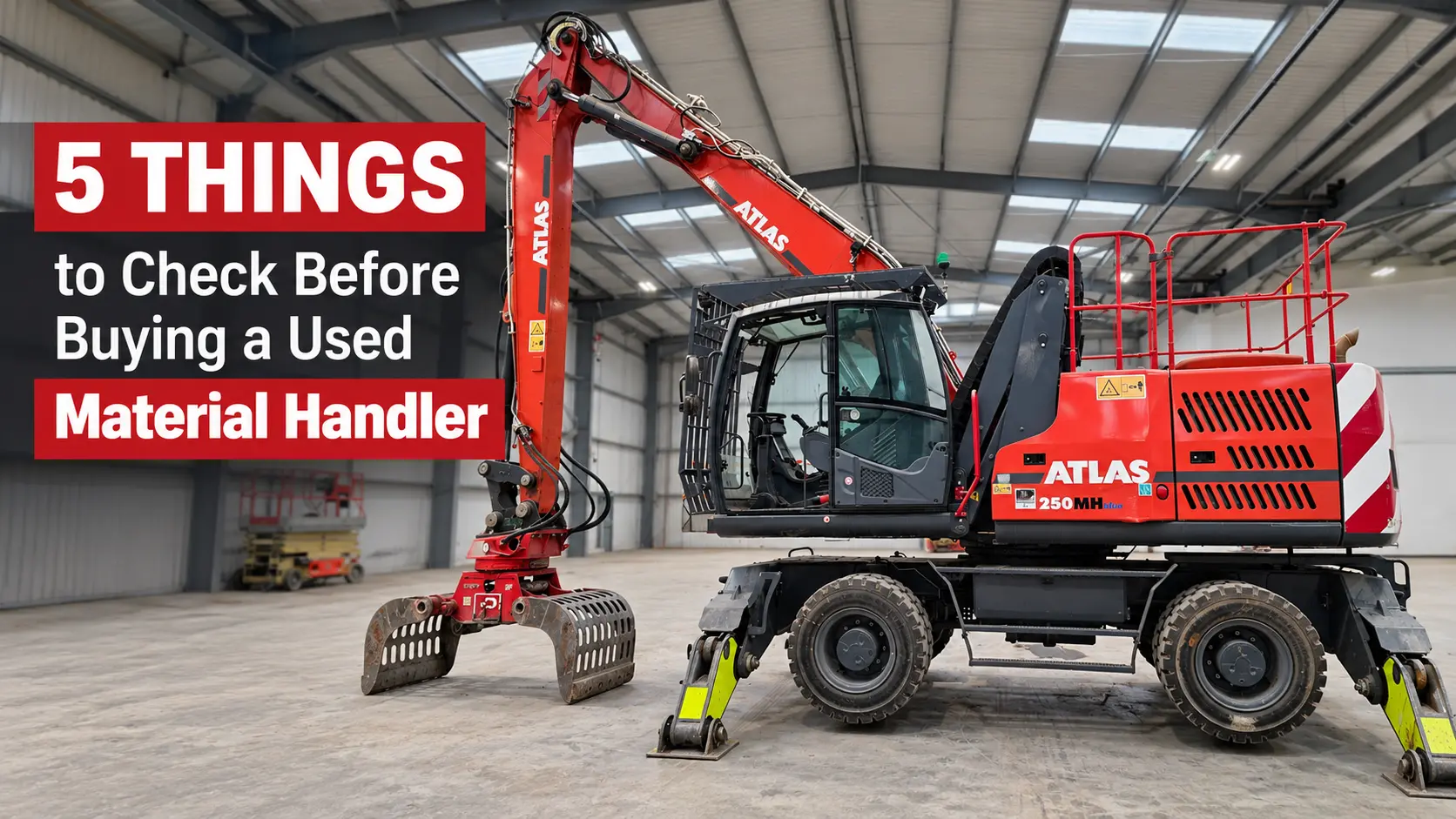
5 Things to Check Before Buying a Used Material Handler for Sale
Buying used equipment always feels like a bit of a gamble and a material handler is no exception. These machines get pushed hard day in, day out, lifting and sorting scrap or waste, so the wear shows up in places you wouldn’t expect. A machine can look perfectly fine from ten feet away and still have problems that only show up once it’s on your site and under load. So before you hand over any money for a material handler for sale, it’s worth slowing down and going through a few checks properly. Here are five things worth your time.
1. Engine Hours and Service History
Start with the hours. It’s the closest thing you’ll get to mileage on a car and it tells you roughly how much life is left in the machine. Low hours with decent care can make an older machine a genuinely good buy. High hours with no paperwork? That’s where you need to be careful.
Ask for maintenance records before you ask anything else. A used material handler that’s been looked after properly should have some kind of history behind it – oil changes, filter swaps, the usual stuff. If the seller shrugs and says they don’t have any records, that’s not necessarily a dealbreaker, but it does mean you’ll want to inspect everything else a lot more carefully.
2. The Boom and Attachment
The boom takes a beating. It’s constantly under stress from lifting, swinging, dropping loads and that adds up over the years in ways that aren’t always visible at first glance. Walk the length of it slowly. Check every joint and weld point, because small hairline cracks are easy to miss and can turn into serious repair costs if they’re left alone.
The attachment matters just as much, whether you’re looking at a grapple, a magnet, or a bucket. These parts take a beating because they’re in constant contact with material. Look for loose pins, worn teeth, or hydraulic leaks around the mounting points. If the material handler for sale you’re eyeing has a tired or outdated attachment, that’s an extra cost you’ll be paying almost immediately after purchase, so it’s worth budgeting for.
3. Hydraulic System
Hydraulics run the whole show – the boom, the cab rotation, pretty much everything. A machine with weak or leaking hydraulics can quietly become the most expensive mistake you make this year. Ask to see the used material handler running before you commit to anything. Pay attention to how the boom moves. Smooth is good. Jerky, hesitant, or slow movement usually means something’s wearing out inside – a pump, a valve, a cylinder, take your pick.
Get down and look under the machine too and check around the hose fittings for oil stains or fresh drips. A tiny leak might seem harmless now, but hydraulic work isn’t cheap. Bring someone along who actually knows these systems if you can. They’ll catch things you’d walk right past.
4. Undercarriage or Tyres
Depending on what kind of material handler you’re looking at, it’ll either sit on tracks or wheels and both wear out eventually – just in different ways and at different costs. On tracked machines, check the pads, rollers and sprockets for uneven wear. Heavy, lopsided wear usually means the machine spent a lot of time on rough or uneven ground.
Wheeled machines are a different story – look at tread depth first, then check the sidewalls for cracking or bulging. Uneven wear across the tyres can also point to alignment problems, which tend to cause other issues further down the line. This is one of the pricier fixes on any machine, so don’t rush this part when you’re checking out a used material handler.
5. Cab, Controls and Electronics
Don’t skip the cab just because it’s the last thing on the list – the operator lives in there for the whole shift, so it matters more than people think. Sit in it. Try every control. Make sure the joysticks feel responsive, the seat adjusts properly and you can actually see what you need to see from the driver’s position. Bad visibility isn’t just annoying, it’s a genuine safety issue on a busy yard.
Take a look at the dashboard too and flag any warning lights or error codes while you’re at it. A lot of newer machines run onboard diagnostics now, so ask the seller if you can plug in and pull a report. It’s often the fastest way to spot something wrong that you’d never catch just by eyeballing the machine. A material handler for sale that comes through this check clean is one you can feel reasonably confident about.
Conclusion
Finding the right used material handler takes more than comparing prices. You need equipment that’s in good working condition, suited to your site and capable of handling the demands of daily recycling operations. A careful inspection now can save you from unexpected breakdowns, expensive repairs and unnecessary downtime later.
If you’re searching for a material handler for sale, OVS Recycling is worth exploring for your recycling machinery needs. Take a look at the available equipment, consider what works best for your operation and make sure the machine meets your requirements before making a decision. The right material handler can help keep your site running efficiently and support your business for years to come.