
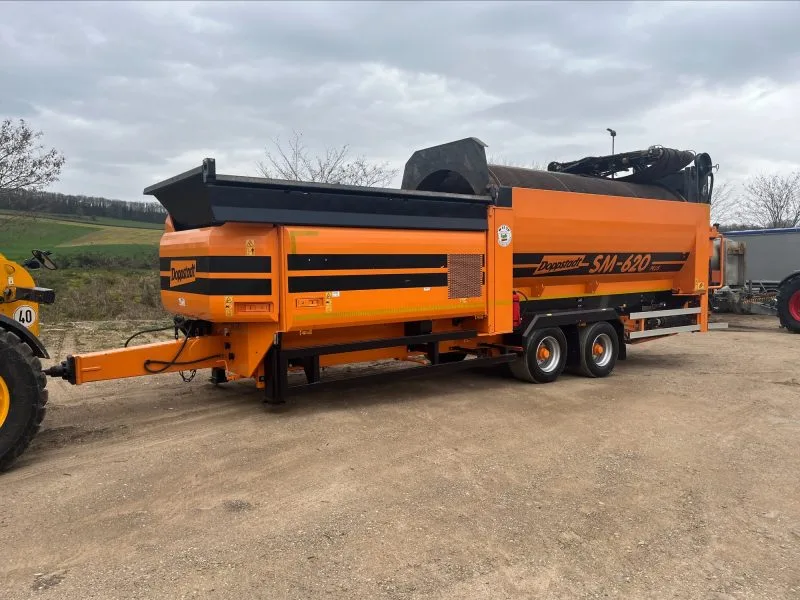
Trommel Screen for Sale in the UK: How to Choose the Right Size & Type
Sorting waste, compost, soil or aggregates by hand takes time nobody has spare. A trommel screen fixes that. It’s a rotating drum that separates material by size as it tumbles through, pulling out stones or contaminants so what comes out the other end is ready to use. The catch is that one trommel screen for sale doesn’t suit every yard. Drum length, mesh type and whether the unit moves or sits still all change how well it fits your site. Here’s what actually matters before you buy.
How a trommel screen works
Picture a long cylinder tilted slightly on its axis, with mesh panels wrapped around the outside. Material feeds in one end. As the drum spins, smaller pieces fall through the mesh holes, while oversized bits keep tumbling until they exit at the far end. That’s the whole mechanism, no complicated moving parts, just gravity and rotation doing the sorting.
It suits compost, topsoil, woodchip and construction waste equally well. The reason sites buy one instead of sticking with manual screens usually comes down to speed. A trommel can outpace a team of workers with rakes and sieves several times over.
Sizing the drum to your volume
Drum length and diameter decide how much a machine can chew through in a shift. A landscaping business processing topsoil in small batches doesn’t need the same unit as a waste transfer station running tonnes an hour. Work out your rough hourly volume before you start browsing listings.
One thing worth asking when you find a trommel screen for sale: what material was the throughput figure tested on? A number based on dry soil means little if you’re screening wet compost, which moves through a drum very differently and slower.
Mesh size decides your output
The mesh openings set how fine your finished product is. Compost producers often want something around 10mm or under, since buyers expect a clean end product. Demolition and construction sites tend to run coarser mesh, because the goal is just pulling out oversized debris rather than producing a refined material.
Some trommels let you swap mesh panels depending on the job at hand. That flexibility matters if your site handles more than one material stream. Buy a trommel screen for sale with fixed mesh and you’re locked into one output size, which becomes a problem the moment your material mix shifts.
Mobile or static
Mobile trommels, tracked or wheeled, can travel between sites. Static ones stay put and cost less, since they skip the engine, tracks and hydraulics a mobile unit needs. A contractor working multiple locations, or one that hires equipment out, gets more value from mobile. A yard processing material in one spot all year is usually better off with static and the lower price tag.
Buying used
A used trommel screen for sale can get you a solid, working machine without the price tag of new. These aren’t complicated machines mechanically: a drum, motor, bearings and a frame. A well looked-after used unit can run for years past its original owner.
Check the mesh panels for wear, look at the bearings and inspect the drive chain or belt. These wear out fastest and cost the most when neglected. Ask for maintenance records if the seller has them. A machine with a documented service history beats a shinier one with no paperwork, most of the time.
Power and feeding
Trommels run on diesel, electric motors, or PTO drive off a tractor. Diesel makes sense where there’s no mains power. Electric costs less to run if power’s already on site and it’s quieter too, useful near housing.
Feeding method matters just as much. Some yards load by hand or skip loader, others run a conveyor or hopper. Whatever trommel screen for sale you’re eyeing, make sure it fits how material actually reaches your site rather than forcing your process to change around the machine.
Matching the machine to the job
There’s no single right answer here. What works depends on your material, your daily volume and how much upkeep you’re prepared to do. A trommel built for compost won’t handle demolition waste well and a unit sized for a small landscaping outfit will fall behind at a busy transfer station fast.
Match drum size, mesh type and power source to what actually comes through your gate each day. When you’re comparing options, check the wear parts closely, ask about service history and make sure the mesh matches your output goal. Get those right and a trommel screen for sale, whether new or used, should hold up to steady daily use for years.