
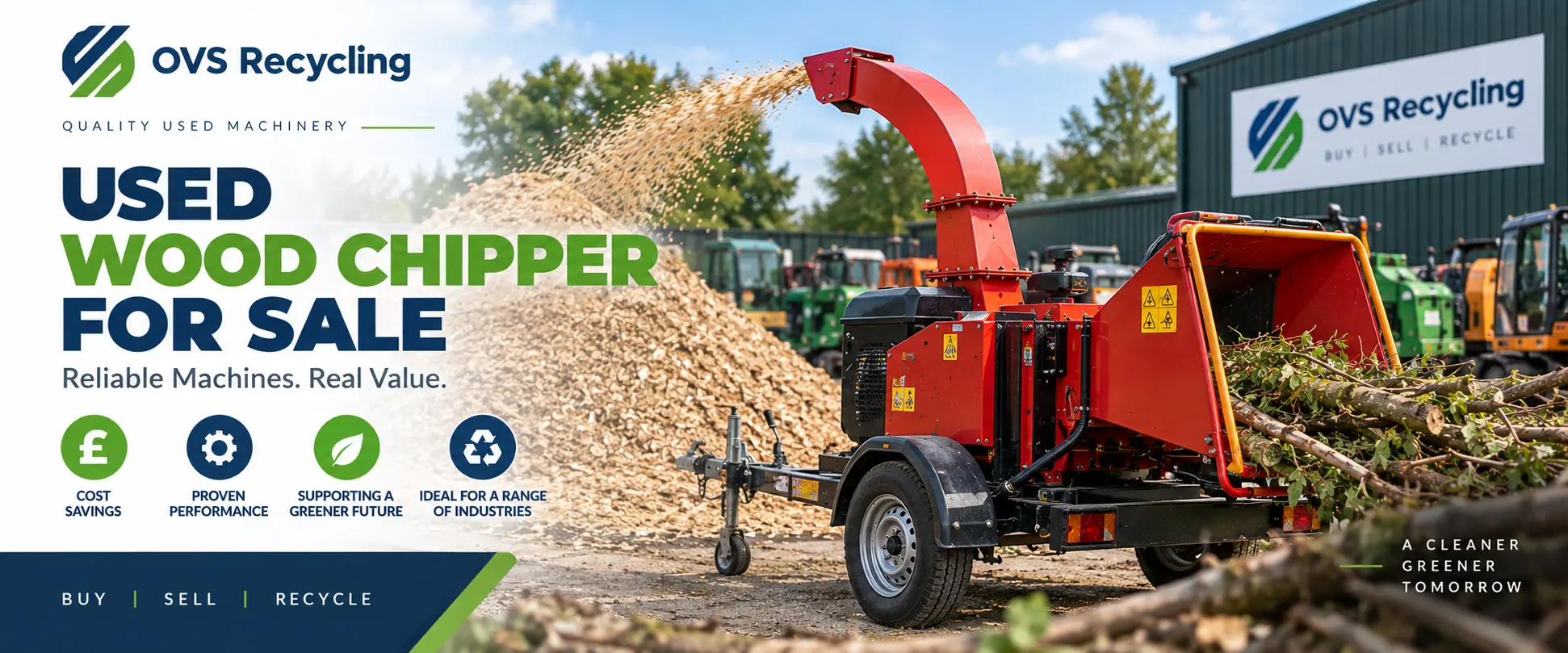
Used Wood Chipper for Sale: What to Know Before You Buy
Anyone who has spent a day clearing branches, felled trees, or site vegetation by hand knows exactly why a wood chipper earns its keep so fast. Whether you’re a tree surgeon, a landscaping contractor, a farmer dealing with hedge trimmings, or a recycling business processing green waste, a reliable chipper turns hours of manual labour into a job that’s done in minutes. The problem is that new machines can be expensive, and for many businesses that cost simply isn’t justified for the number of hours the machine will actually clock up. That’s exactly why so many buyers now search for a used wood chipper for sale instead of ordering brand new.
The used market for chippers has grown considerably over the past few years, and for good reason. These machines are mechanically simple compared to a lot of other heavy equipment, they’re built to withstand rough outdoor use, and when properly maintained they can run for many years without major issues. That combination makes them a genuinely low-risk purchase on the secondhand market, as long as you know what to look for.
Why Consider a Used Chipper Instead of New
Significant cost savings. A used wood chipper for sale can often be found for a fraction of the price of a new equivalent, sometimes 40 to 60 percent less depending on age, brand, and condition. For seasonal or occasional users, that difference can be the deciding factor between buying and simply hiring one every time a job comes up.
Simple mechanics mean lower risk. Unlike complex hydraulic excavators or electronically controlled machinery, most chippers rely on relatively straightforward drum, disc, or drum-and-blade systems powered by a diesel or petrol engine. Fewer complicated components generally mean fewer expensive things to go wrong.
Fast turnaround. Buying used means you can usually collect or arrange delivery within days rather than waiting weeks for a new order to be manufactured and shipped.
Better value retention. Chippers, much like other used construction and groundcare machinery, tend to hold their value reasonably well once they’ve absorbed the initial depreciation hit that comes with buying new.
Types of Chippers You’ll Come Across
When browsing tree chipper for sale listings, you’ll typically come across a few main categories, and knowing the difference matters because each is suited to slightly different jobs.
Disc chippers use a rotating flywheel with blades mounted on its face. They’re known for producing a consistent, uniform chip and are popular with arborists who need clean material for mulch or biomass fuel.
Drum chippers use a cylindrical drum fitted with blades along its length. These tend to handle larger branches and thicker material more aggressively, making them a favourite on bigger clearance and forestry jobs.
Screw or cone chippers pull material in using a screw-shaped cutting head. They’re quieter and often safer for smaller operations, though they generally can’t handle the same volume as disc or drum types.
Towable vs. self-propelled models. Many chippers are designed to be towed behind a van or pickup, which suits mobile tree surgery businesses. Larger operations sometimes prefer self-propelled or tracked chippers that can move independently around a site.
What to Check Before Buying a Used Chipper
A chipper looks simple on the surface, but a few worn or damaged components can turn a bargain into an expensive headache. Here’s what to inspect carefully.
Blade condition. Blades wear down or chip with heavy use. Check whether they’ve been sharpened repeatedly (which reduces their lifespan) or if they still have plenty of life left. Replacement blades are available for most models, but the cost adds up if several need replacing at once.
Engine hours and service history. Just like with any engine-powered machine, hours tell a story. A well-documented service history with regular oil changes and filter replacements is a strong sign the previous owner looked after the machine properly.
Feed rollers and chute. Inspect the feed mechanism for excessive wear, rust, or damage. A chipper that struggles to pull material through evenly will slow down every job it’s used on.
Bearings and drive belts. Listen for unusual noise during operation if possible, and check belts for cracking or fraying. These are wear items that are cheap to replace individually but expensive if neglected long enough to damage other components.
Safety features. Make sure emergency stop mechanisms, safety guards, and anti-kickback bars are all present and functioning. These aren’t optional extras; they’re essential for safe day-to-day operation.
Where People Search for Chippers for Sale
Buyers looking for chippers for sale in the UK generally fall into a few groups: tree surgery and arboriculture businesses, landscaping and groundcare contractors, farms managing hedgerows and woodland, local councils maintaining public land, and recycling or waste management companies processing green waste at scale.
Each of these buyers has slightly different priorities. A tree surgeon might prioritise portability and towability, while a recycling operation processing large volumes of waste is more likely to need a heavier duty, higher throughput machine that can run for extended periods without overheating or clogging.
How OVS Recycling Can Help
At OVS Recycling, chippers and other groundcare equipment are part of a wider range of used machinery supplied to businesses across the UK. The focus is on offering equipment that has been properly checked over, with honest information about hours, condition, and any work that’s been carried out, rather than vague listings that leave buyers guessing.
Buying from a supplier with genuine experience in the recycling and waste sector also means getting advice from people who understand how these machines are actually used day to day, not just how they look in a photo. That’s a meaningful difference when you’re trying to work out whether a used wood chipper for sale is genuinely good value or simply priced to move quickly before problems become obvious.
Tips for Getting the Best Deal
- Ask for a demonstration wherever possible, so you can see the machine actually chipping material rather than just running empty.
- Compare like-for-like models rather than judging purely on price, since older or heavier duty machines may look expensive but outperform cheaper alternatives significantly.
- Budget for consumables such as blades and belts as part of your total cost of ownership, not as a surprise expense later.
- Check compatibility with your vehicle if you need a towable model, including towing capacity and hitch type.
- Buy from a seller who welcomes questions. A dealer who’s happy to talk through service history and answer detailed questions is usually a safer bet than one who rushes the sale.
Final Thoughts
A wood chipper is one of those pieces of equipment that pays for itself quickly once it’s part of your regular workflow, and buying used is a smart way to get that capability without overspending. Whether you’re searching for a used wood chipper for sale to support a growing tree surgery business, comparing tree chipper for sale listings for seasonal farm work, or browsing general chippers for sale to expand a recycling operation’s capacity, the same basic rules apply: check the blades, check the engine, check the history, and buy from someone who’s transparent about what you’re getting. Do that, and a secondhand chipper can serve your business reliably for many years to come.